How Chatbots Actually Write (Without the Math)
You’ve used a tiny version of this technology for years: autocomplete. Now imagine an autocomplete that can look back, decide which earlier words matter most, and keep going for whole paragraphs—fast. That’s the core trick behind today’s chatbots. It isn’t magic and it isn’t mind-reading; it’s pattern-based writing. The system chooses the next small piece of text, then the next, until an answer appears. The mechanism doing the heavy lifting is called attention. Understand that, and the wow moments—and the weird ones—make sense. Carry one idea with you: these systems are pattern machines, not people.
We’ll tour the mechanism without math, show why answers “feel” different across models, and ground it with everyday cases at work. We’ll keep the focus on how you work with the model: give clear roles, anchor to sources, and use small, reliable steps. We’ll also keep our scope honest: longer “memory,” models that take more careful steps before answering, and light-touch rules that are starting to shape how this tech shows up in your tools.
The Plain-English Tour
Tokens — the pieces
Chatbots don’t read paragraphs like we do. They split text into tokens—small units, often parts of words—like puzzle pieces that snap into sentences. During generation, the model picks the next token again and again until it’s done. That’s why replies feel incremental and why short prompts sometimes yield short, cautious answers. (No equations, no secret handshake—just a fast loop of “What’s the next piece?”)
Embeddings — the meaning map
Each token gets an address on a vast meaning map where similar ideas sit close together. “Dog” and “puppy” are neighbors. “Dog” and “democracy” are not. You never see this map directly, but it quietly guides tone, topic jumps, and word choice.
Attention — the spotlight
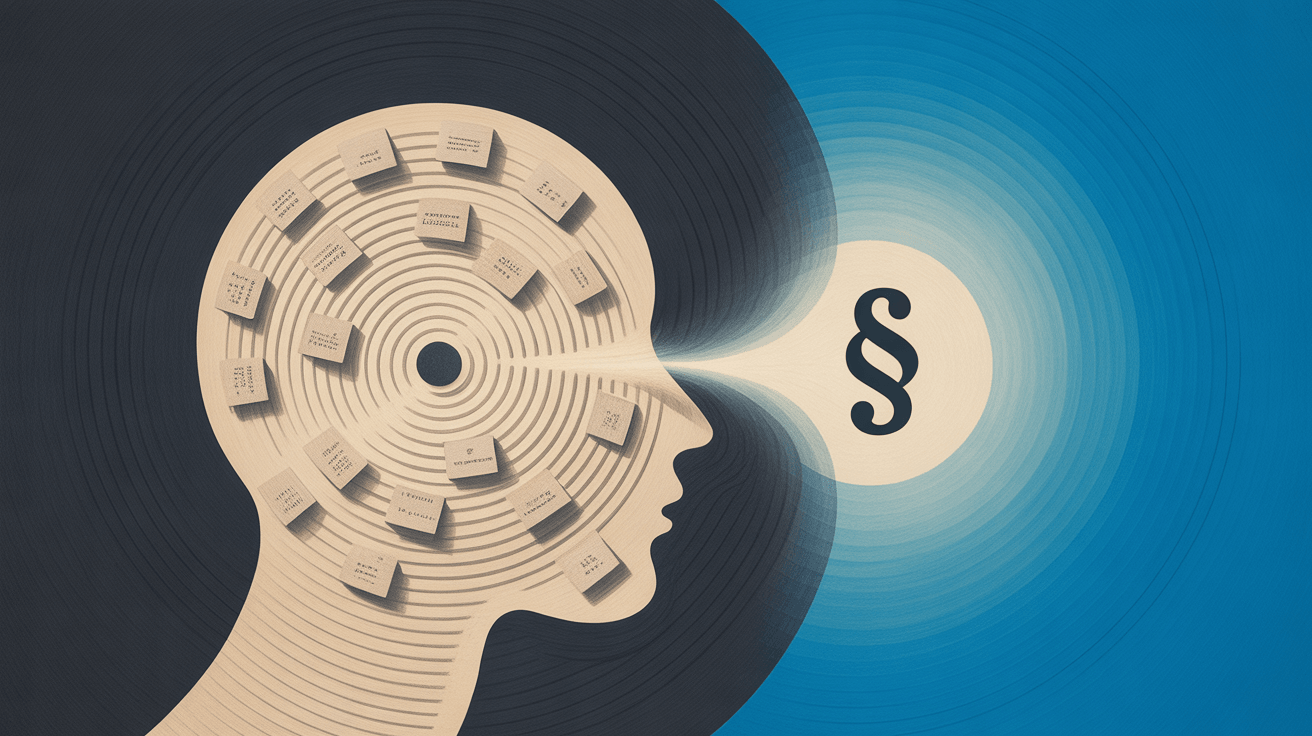
As the model writes, it keeps asking: Which earlier words matter most right now? Attention is the spotlight that brightens the useful words and dims the rest. Stack many spotlight layers and you get the Transformer architecture—the design that unlocked today’s fluency. Think of it as the model’s way of looking: it decides what deserves the brightest light before it writes the next piece.
Parameters — the knobs
Inside are millions to trillions of small weights—the knobs the system learned to set during training. You never touch them. They freeze what the model distilled about language patterns: how likely certain pieces are to follow others, and when.
Training data — the library
Where did it learn? From a large, mixed library of text: books, web pages, code, and more. Cleaner, more diverse data usually means better behavior. The model doesn’t memorize the internet; it learns reusable patterns about how language behaves. That’s why it can generalize to new prompts—and why it sometimes makes confident mistakes when patterns mislead it.
Inference — showtime
When you prompt the model, it tokenizes your text, shines attention where it matters, and picks the next token, then the next. You influence the feel with the decoding policy—even when you can’t see a slider. In consumer chat apps, the platform chooses safe defaults; you steer with instructions (e.g., “concise, deterministic bullets” vs. “three surprising alternatives”). In APIs or local tools, the classic temperature / top-p knobs still exist.
Why Different Models Feel Different
Context window — short-term memory
The context window is how much text a model can hold in mind at once. Bigger windows can keep longer instructions, multiple examples, and large source excerpts without losing the plot. That shift alone changes what managers, analysts, and creators can put into a single prompt.
Alignment — the polish layer
After base training, labs tune models to be more helpful and safe. Some use rule-sets the model references to critique and revise its own answers; others use human feedback to teach tone and boundaries. Either way, this post-training polish is why “use a friendly tone” often works and why the model declines certain requests. It’s not a conscience; it’s scaffolding.
Decoding policy — conservative ↔ creative (visible in APIs, implicit in apps)
Even with the same model and prompt, decoding policy changes the vibe. Consumer apps pick defaults; you steer with instructions. Builders and local-LLM users can still set temperature / top-p to trade consistency for variety.
Reasoning-tilted models — deliberate steps
A recent turn in model design emphasizes deliberation. Newer models take more internal steps before answering. You feel it as fewer off-the-cuff guesses and more steady, step-wise problem solving. “Think it through” is shifting from a prompt trick to a product feature.
Applications: Three Human-Scale Cases
1) The meeting alchemist
Goal: Turn messy meeting notes into a clean summary.
- Pull owners / deadlines / blockers.
- Produce: (a) two-level outline, (b) 1-paragraph brief, (c) table Owner | Due | Blocker.
- If a detail is ambiguous, append (?) and quote the original line.
- Keep names unmerged (treat similar names as different people).
Your weekly notes are a tangle—bullets, tangents, jokes, action items buried everywhere. With a long context window, paste the whole doc and ask:
- “Pull out owners, deadlines, and blockers.”
- “Return a two-level outline and a one-paragraph brief.”
- “Flag ambiguous items with (?), and quote the source line.”
Attention acts like a ruthless highlighter, surfacing what matters and compressing the rest. Bigger windows mean fewer “you cut the good part” moments and more faithful summaries. (Finally, a de-tangler for meeting spaghetti.)
Process that works (checklist):
- Role + Task: “You’re a project coordinator. Extract owners, deadlines, blockers.”
- Inputs: Paste/attach the notes; state what not to invent.
- Format: “Two-level outline + table (owner | due date | blocker) + 1-paragraph brief.”
- Checks: “Mark unclear items with (?) and quote the line; don’t merge similar names.”
- Human pass: Verify names and dates before sending.
2) The solo creator’s copy loop
You are a marketing writer.
Audience: [describe].
Task: Draft three alternatives for this landing page section.
Constraints:
- Match Version B’s rhythm but keep the three benefit bullets from Version A.
- Headline < 60 chars. Reading level ≈ Grade 8. Avoid jargon.
Return:
- **Conservative:** stable phrasing and structure
- **Balanced:** tasteful variation, same constraints
- **Adventurous:** bold reframe; still honor bullets + headline limit
Then add a comparison table: what changed and why.
You’re shaping a landing page. Give the model a crisp brief: audience, tone, constraints, and examples. Try:
- “Match version B’s rhythm, but keep the three benefit bullets from version A.”
- “Headline under 60 characters. Grade-8 reading level. Avoid jargon.”
Consumer apps hide knobs; instructions are your control surface. If you do have parameters (API/local), maintain three presets:
- Conservative (stable phrasing and structure)
- Balanced (a few tasteful variations)
- Adventurous (three distinct takes; expect edits)
Cadence:
- Pass 1: Draft Conservative / Balanced / Adventurous.
- Pass 2: Ask for a comparison table: what changed and why.
- Pass 3: Merge: “Combine A’s structure, B’s headline, C’s call-to-action.”
3) The research synthesizer
Synthesize the following sources into a brief for a smart, non-technical reader.
Deliver:
1) 120–160 word summary.
2) 3–5 bullet insights with inline quotes.
3) A sources list with links (use the titles provided).
Rules:
- Quote exact lines for any surprising claim.
- Note uncertainty with (?), and say what additional info would resolve it.
- No filler. No invented facts.
You’ve collected credible snippets. Ask for a structured brief with quotes and links. The lift isn’t only the prose; it’s the orchestration:
- The model drafts.
- Retrieval (or your links) grounds claims.
- A light governance habit labels what was AI-assisted and why.
Teams that see real value aren’t just “using a chatbot.” They’re rewiring small processes around it: what counts as a source, where citations live, who approves final language. Investment and usage are climbing, but process redesign is what turns experiments into impact.
Implications: Work, Culture, and the Rules Taking Shape
Work — first drafts, faster (if you change the process)
This isn’t only “faster writing.” It changes who makes first drafts, how teams summarize, and what “good enough” means. Organizations with visible gains do the boring but effective things: attach sources, mark uncertainty, and track accuracy and turnaround. The winning pattern looks less like sprinkling chatbots everywhere and more like redesigning the steps around them.
A small playbook that scales:
- Define where AI helps (summaries, briefs, variants)—and where humans must decide (priorities, tone, final claims).
- Attach sources, not just vibes.
- Ask models to mark uncertainty and cite.
- Track a few KPIs (turnaround time, revision cycles, accuracy checks) so improvements are visible.
Quality check this draft:
- Flag ambiguous statements and add (?) with a suggested clarifying question.
- Highlight any claim lacking a source.
- List top 3 risks of misinterpretation and propose a one-line fix for each.
Return the revised draft followed by a brief change log.
Culture — authorship, provenance, the label question
Who “owns” a draft? Do we label AI assistance? Some readers care most about whether a piece is grounded. Others want the full label. Either way, provenance—where did this come from?—is becoming part of the reading experience. Expect more products to make source trails easier and disclosure more consistent.
Governance, in Brief (sidebar)
Provenance matters. When output depends on sources, keep a traceable trail—links, quotes, snippets—and label AI assistance when it would change how a reader interprets the work.
Privacy is power. Don’t paste secrets. Use the “redact or omit” rule for anything sensitive; treat prompts as potentially reviewable logs.
Organization fit. Borrow from mainstream risk frameworks. Decide what’s green/yellow/red for data and disclosure, write it down, and stick to it.
The goal isn’t paranoia—it’s autonomy with receipts.
Add a one-line disclosure suitable for this context that notes AI assistance and links to key sources.
Tone: factual, unobtrusive, professional.
What’s Next (and What Isn’t)
The road ahead is longer memory + better reasoning + tool use, not human-like consciousness. Expect models to accept more of your context (docs, data, screenshots), reason more deliberately, and call external tools (search, spreadsheets) to stay grounded. Longer windows reduce “I lost your earlier instruction” moments. Deliberation cuts down on off-the-cuff errors. Tool calls add facts the model didn’t learn during training. All of that should lower the rate of “confidently wrong”—but human verification stays non-negotiable.
How to Talk to a Model (utility box)
You are a project coordinator. From the text below:
1) Extract owners, deadlines, and blockers.
2) Return a two-level outline and a one-paragraph brief.
3) Include a table with columns: Owner | Due date | Blocker.
4) Mark unclear items with (?) and quote the source line.
Do not invent details. Use the exact names found in the text.
State role, task, and output format
- “You’re a project coordinator. Summarize the attached notes into a two-level outline. Include a table: owner | due date | blocker.”
Show an example
- “Here’s a strong brief from last week. Match its structure and reading level.”
Simulate style (no knobs needed)
Write in a **conservative and consistent** style: short sentences, tight paraphrase, no speculation.
Afterward, produce **two alternative takes** with different framing—but the same facts.
Label each version clearly. Avoid repetition across versions.- “Be conservative and consistent.” (stable, repeatable tone)
- “Offer three distinct alternatives.” (higher diversity)
Ask for uncertainty and citations
- “Mark unclear items with (?) and quote the source line; include links.”
Use retrieval when facts matter
- If your tool supports it, point the model at a vetted folder or site section rather than pasting raw text.
Sidebar — Temperature, Without the Slider
In most consumer chat apps, you won’t see a temperature knob; the platform picks a safe decoding policy. You still shape style with instructions: ask for “concise, consistent bullet points” for stability, or “surprising alternatives” for breadth.
Building with an API or running a local model? Temperature still scales randomness. As a mental model: low ≈ precise & repeatable; medium ≈ balanced drafting; high ≈ diverse & risky. Pair with top-p for finer control.
Bottom line: Instructions first; knobs if you have them.
Myth vs. Reality (quick hits)
- Myth: You need a temperature setting to control style.
Reality: Consumer apps hide it; good instructions act as your style control. Builders and local users can still set temperature/top-p via API or UI. - Myth: It understands like a person.
Reality: It’s astonishingly good at predicting the next token from learned patterns. Sometimes that looks like understanding; sometimes it doesn’t. - Myth: Bigger always means better.
Reality: Capability comes from size and data quality, alignment, context window, and how you prompt. Longer memory and steady deliberation often change the feel more than raw parameter count.
Closing Reflection
If attention is the spotlight that makes chatbots fluent, process and prompt craft are the stage you build around that light. The most reliable wins this year won’t come from chasing the biggest model. They’ll come from feeding the right material (long windows help), asking for careful steps (deliberation helps), and adopting light governance (labels, links, privacy hygiene) that fits your team. Treat the system as a pattern partner: you supply examples, constraints, and sources; it supplies speed, structure, and drafts you can refine.
One question to leave on the table: What would you create—or clean up—if the first draft took minutes, not hours? The answer is rarely “everything.” It’s a few high-leverage tasks where attention’s spotlight, long memory, and steady reasoning actually change the day’s work. Start there. Measure. Keep receipts. The future looks less like a single genius in a box and more like a steadily improving collaborator—one that gets better as you redesign how you work around it.
- Jay Alammar. “The Illustrated Transformer.” Jay Alammar Blog, 2018. https://jalammar.github.io/illustrated-transformer/
- Google Developers Blog. “New features for the Gemini API and Google AI Studio.” Google Developers Blog, 2024. https://developers.googleblog.com/en/new-features-for-the-gemini-api-and-google-ai-studio/
- Google Cloud. “The Needle in the Haystack Test and How Gemini Pro Solves It.” Google Cloud Blog, 2024. https://cloud.google.com/blog/products/ai-machine-learning/the-needle-in-the-haystack-test-and-how-gemini-pro-solves-it
- OpenAI. “Introducing o3 and o4-mini.” OpenAI, 2025. https://openai.com/index/introducing-o3-and-o4-mini/
- Kylie Robison. “OpenAI’s upgraded o3 model can use images when reasoning.” The Verge, 2025. https://www.theverge.com/news/649941/openai-o3-o4-mini-model-images-reasoning
- Stanford HAI. “The 2025 AI Index Report.” Stanford Institute for Human-Centered Artificial Intelligence, 2025. https://hai.stanford.edu/ai-index/2025-ai-index-report
- McKinsey & Company. “The state of AI: How organizations are rewiring to capture value.” McKinsey Global Survey, 2025. https://www.mckinsey.com/capabilities/quantumblack/our-insights/the-state-of-ai
- Yuntao Bai, Saurav Kadavath, Sandipan Kundu, et al. “Constitutional AI: Harmlessness from AI Feedback.” arXiv, 2022. https://arxiv.org/abs/2212.08073 — Anthropic explainer: https://www.anthropic.com/research/constitutional-ai-harmlessness-from-ai-feedback
- European Commission. “General-Purpose AI Code of Practice (overview).” European Commission — Digital Strategy, 2025. https://digital-strategy.ec.europa.eu/en/policies/contents-code-gpai
- European Commission. “Explanatory Notice and Template: Public Summary of Training Content for GPAI Models.” European Commission — Digital Strategy, 2025. https://digital-strategy.ec.europa.eu/en/library/explanatory-notice-and-template-public-summary-training-content-general-purpose-ai-models
- National Institute of Standards and Technology (NIST). “Artificial Intelligence Risk Management Framework (AI RMF 1.0).” NIST, 2023. https://www.nist.gov/publications/artificial-intelligence-risk-management-framework-ai-rmf-10 (PDF: download)
- National Institute of Standards and Technology (NIST). “Artificial Intelligence Risk Management Framework: Generative AI Profile (NIST AI 600-1).” NIST, 2024. https://www.nist.gov/publications/artificial-intelligence-risk-management-framework-generative-artificial-intelligence (PDF: download)
- Reuters. “Code of practice to help companies with AI rules may come end 2025, EU says.” Reuters, 2025. https://www.reuters.com/business/media-telecom/code-practice-help-companies-with-ai-rules-may-come-end-2025-eu-says-2025-07-03/
- Associated Press. “EU unveils AI code of practice to help businesses comply with bloc’s rules.” AP News, 2025. https://apnews.com/article/a3df6a1a8789eea7fcd17bffc750e291